
A meditation on risk

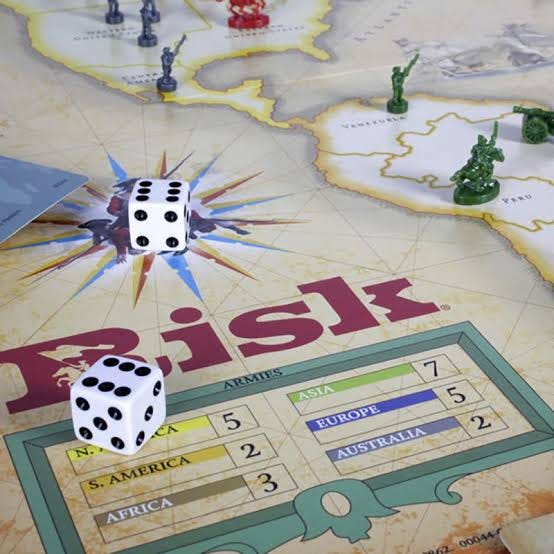
I have just returned from a gathering in South Africa, focused on financing medical innovation. It’s a subject I was almost totally ignorant about, but my job was to offer input on narratives. The word ‘risk’ came up a lot. I learned that after the financial crisis of 2008, a bunch of bankers who were out of work because their machinations had collapsed the global economy, found there was money to be made in developing all sorts of complicated financial mechanisms to fund the research, development and rollout of medicines, vaccines, and other medical technologies.
A standout feature of most of these mechanisms, aside from their mind-boggling complexity, is that they prioritise limiting risk – and by risk is meant any chance of private financiers losing their money. Public-private partnerships are set up so that public money — taxpayer dollars — can ‘de-risk’ private investments. To put it more plainly, these complicated deals — debt swaps, social impact bonds, and the like — rig the game in favor of private investors, who stand to make big gains should their investment pan out, but who need not fear losing anything should things not go so well. In that event, governments, and therefore taxpayers, are on the hook to cover the bill.
That word risk really rang in my head, because I’d been hearing it a lot prior to this meeting. Foundations cutting off grantees that were perceived to be too ‘risky’. Withdrawing from any funding in particular countries, because of the ‘risk.’ Changing strategies and moving away from funding human rights, social justice, trans rights, gender… because of perceived ‘risk’.
Let’s leave aside for now that many of the organizations obsessed with limiting risk are far better positioned than most to handle it. They have billions of dollars in endowments. They employ teams of well-educated lawyers. It is fascinating to me that in the discussion of risk, both in funding medical innovation, and in funding social justice activists and movements (including narrative change), the word ‘risk’ is used to justify protecting the rich and the privileged. Is used to prioritise protecting great wealth from any sort of taint or loss.
When it comes to healthcare and medical innovation, the word ‘risk’ is not used to talk about the risk of dying, for people who cannot afford their medication, or who are unlucky enough to have a disease or condition that’s not profitable to cure. The word ‘risk’ is not used for the patient rushed to the emergency room, who faces bankruptcy once the bills start to arrive. When it comes to big philanthropy, the word ‘risk’ is not used for trans people who are left to the mercy of authoritarian demagogues, or women who can’t get abortions, or queer people who face prison because they lost their funding, and with it whatever meagre services and advocacy opportunities, and emergency rescue plans remained to them. The word ‘risk’ is not used to get us to think about all of the potential artists, thinkers, scientists, humanitarians, loving parents and siblings the world is losing out on as millions of people lose access to education, housing and healthcare.
But god forbid a billionaire should lose a buck or two.
A large part of the problem is neoliberalism, which is, as George Monbiot and Peter Hutchison point out in their book, A Secret History of Neoliberalism, the dominant ideology of our times, affecting nearly every aspect of our lives. I was struck recently watching a TV series recreating life in a 15th Century village, by how all of the language and thinking revolved around God and the church, such that it was almost impossible to think outside of this frame.
Today, thanks to neoliberalism, the language we use frames almost everything in terms of markets and economics, and locates all value on the basis of financial/economic measures. Neoliberalism provides many of the metaphors we commonly use to describe human affairs, such that it is difficult even to imagine a different way of talking and thinking. It has given us a whole slew of words that we commonly use in daily life and work, that may have a range of meanings but which operate in such a way as to entrench the narrative of markets and economic logic. ‘Risk’ is one of those words, but there are many others.
How about ‘value’? Seen in economic or financial terms – ‘value’ is something that can be countered and measured. However, the word ‘value’ or ‘values’ also refers to things we believe to be important: ‘our set of values’. Since questions of value/worth in this non-economic sense do not lend themselves to be counted or measured, they do not weigh as heavily in decision-making in a world increasingly obsessed with ‘scale’, measuring ‘impact,’ and ‘return on investment.’
Then there is ‘worth’. It blows my mind that we speak of a rich person as someone of ‘high net worth’’ — as if the amount of money and resources they have hoarded determines their ‘value’. It’s logical then to prioritize risk to them, rather than to people who are poor and marginalized, with little ‘net worth’.
‘Invest’. This word can mean support, dedication or interest (‘I’m deeply invested in the survival of democracy’), but the predominant meaning is an economic one. To ‘invest’ is to contribute resources with expectation of a return (profit, or ‘impact’).
These terms and many others like them are so entrenched in our language that it’s actually really hard to come up with different ones, try as you might. Yet it’s high time we make a concerted effort, as the words we use every day are undermining our best intentions.
One might argue that I’m focusing too much on language, when what’s really happening is the exercise of power: a story as old as time. Yes, and… the language we use is hiding and helping legitimize and perpetuate that power. Denaturalizing that language, stopping and trying to think of different ways of expressing ideas, helps us see and understand how that power operates, and gets us thinking about how things could, and should, be different.